

Inside the NRF2 Pathway: How Oxidative Stress Influences Canine Health
Updated: Apr 2
Dogs, like humans, face daily challenges from oxidative stress that can affect their overall health, energy, and longevity. Understanding how to support your dog's body at a cellular level can make a world of difference in their health and quality of life.
In this blog post, we will explore how oxidative stress impacts the body, and how the protective role of NRF2 activation works for dogs via nutrigenomics. Additionally, it's important to note that proper nutrition greatly supports this process to keep your furry friend healthy and feeling their best.
Washing State University has stated NRF2 to be:
"The most extraordinary therapeutic and most extraordinary preventive breakthrough in the history of medicine."
Additionally, they stated the following:
"Nrf2 is argued to be both lifespan and healthspan extending."
"Nrf2 is likely to be the most important health promoting approach into the foreseeable future."
-Source.
How cool is that?
All this for something you have likely never even heard of before!
By reducing oxidative stress through NRF2 activation, you can help your dog maintain better energy levels, healthier joints, improved cognitive function, and assist in overall resilience to everyday stressors and toxins.
Now that I have your full attention:
Let's dive in!!
What is Oxidative Stress?
Oxidative stress is a complex biological series of events that arises when there is an imbalance between free radicals and the body’s ability to counteract their harmful effects with antioxidants.
This interaction can lead to significant damage to essential cellular functions which affects tissues and eventually the organs.
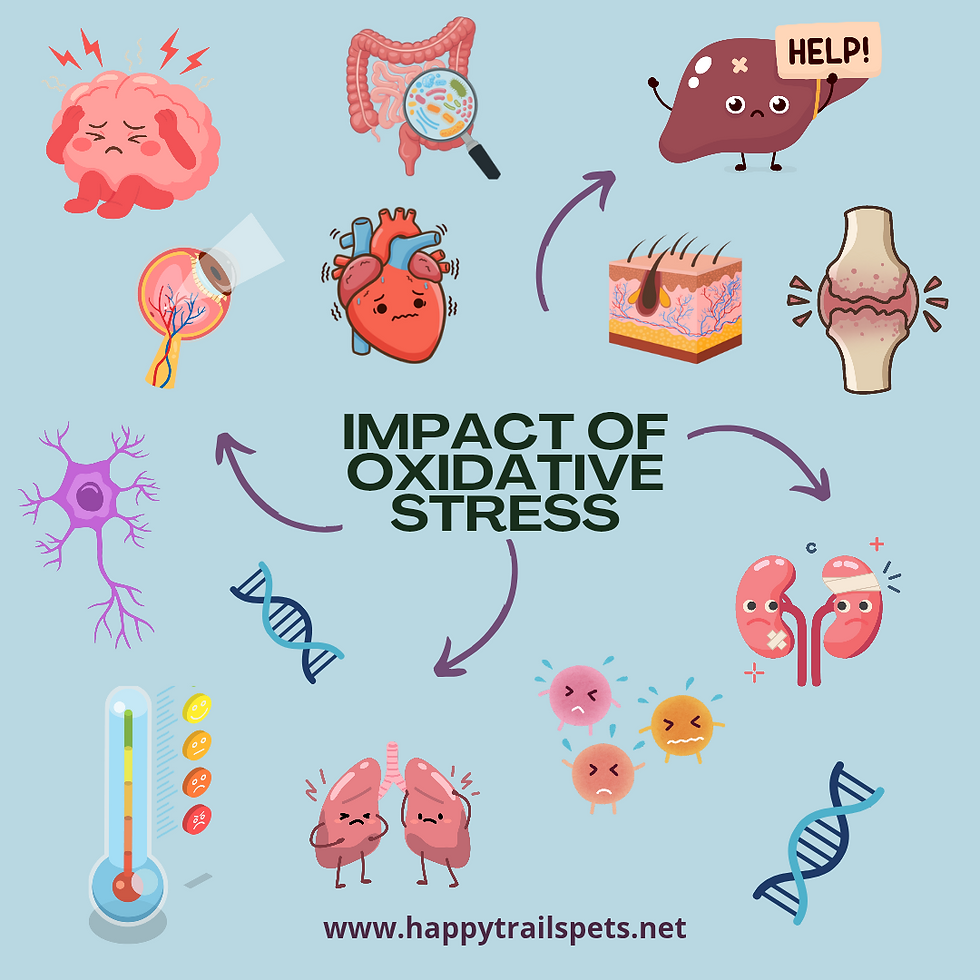
Oxidative stress in the body is like an internal rust.
Just as rust forms on metal when it is exposed to moisture and oxygen over time, leading to deterioration and structural damage, oxidative stress occurs when there is an imbalance between free radicals and antioxidants in our body. This imbalance can result from various factors, including exposure to environmental toxins, mental stress, obesity, poor diet, and even normal metabolic processes.
The Role of Free Radicals
Free radicals, also known as reactive oxygen species (ROS), are highly reactive, unstable molecules that can damage cells by stealing electrons from other molecules, which can lead to a chain reaction of cellular damage.
Some free radicals are produced during normal metabolic processes, such as the conversion of food into energy, but they can also be introduced into the body through external sources like pollution, radiation, medications, and exposure to certain toxins.
When the production of free radicals exceeds the body’s ability to neutralize them with antioxidants, oxidative stress occurs, which harms the cellular membranes, including lipids, proteins, and DNA, ultimately contributing to the development of various diseases and an acceleration in the aging processes.
Antioxidants: The Body's Ultimate Defense
Antioxidants are molecules that can donate an electron to free radicals without becoming destabilized themselves, effectively neutralizing them.
Antioxidants can be obtained through the diet. Foods that are rich in vitamins C and E, selenium, and various phytochemicals found in fruits and vegetables play a crucial role in bolstering the body's antioxidant defenses. This is why I'm a huge advocate for giving whole foods to our pets!
The body can also produce its own antioxidants, aside from obtaining them through food.
This is where we see a massive opportunity to shift wellness upward, when supported and activated correctly.
However, when the supply of antioxidants is insufficient to combat an abundance of free radicals, the body can suffer from oxidative damage, much like what we talked about briefly regarding metal that succumbs to rust when a protective coating is compromised.
Why Glutathione is important
Glutathione is widely recognized as the primary antioxidant in the body, playing a crucial role in maintaining cellular health and protecting against oxidative stress. It is primarily synthesized in the liver.
This powerful antioxidant (tripeptide), is composed of three amino acids:
Cysteine
Glutamine
Glycine
It exists in nearly every cell in the body and is vital for carrying out various biological processes.
The antioxidant properties of glutathione are essential for neutralizing free radicals, which can cause significant damage to cells, proteins, and DNA if left unchecked.
Beyond its role as an antioxidant, glutathione serves a critical function within the body, specifically within the detoxification process, particularly in the liver, where it assists in the elimination of toxins, heavy metals, and other harmful substances.
This detoxifying capability is vital for maintaining overall health and preventing the accumulation of harmful compounds that could lead to various health issues.
How Oxidative Stress Can Harm Your Dog’s Health
The consequences of oxidative stress are far-reaching and can lead to a variety of diseases and other imbalances within the body.
We already know it damages cells, but cells makeup every organ and tissue in the body. Therefore, each organ system is at risk to oxidative stress and the damage it causes.
Chronic oxidative stress has been shown to play a major role in the development of numerous diseases, including:
Cardiovascular diseases
Diabetes
Kidney dysfunction
Behavioral disorders
Bone and joint issues
Skin concerns
Neurodegenerative diseases (such as Alzheimer's)
And even cancer
The damage caused by oxidative stress can trigger inflammation, leading to cellular dysfunction, accelerate the aging process, and eventually a decline in overall health and vitality.
This isn't typically something that happens overnight, though. Think of it as a smoldering volcano (oxidative stress) bubbling beneath the surface for weeks, months, and even years before it finally erupts (symptoms).
Chronic inflammation is another significant contributor to elevated oxidative stress levels in dogs. Conditions such as allergies, arthritis, and infections can lead to persistent inflammatory responses, which in turn generate more free radicals as part of the immune response.
Obesity also falls into this loop.
The intertwined cycle of inflammation and oxidative damage can create a detrimental effect on the overall health of your dog, leading to a higher risk of degenerative diseases.
For dogs, the chronic build up of oxidative stress can be particularly concerning as they are typically exposed to so much more, and have shorter lifespans than us humans.
The consumption of processed foods (which often contain moldy grains, preservatives and artificial additives) and inflammatory oils (including canola oil), can lead to an increased production of free radicals in the body.
Feeding a low quality, highly processed diet can also lead to nutritional deficiencies, including a lack of necessary nutrients that support the antioxidant defense system, such as vitamins C and E, selenium, zinc, and various phytochemicals found in fruits and vegetables. Most pet foods don't contain a lot of whole foods in their formulas, let alone in beneficial amounts. When this happens, we typically see skin issues, dry skin and coat, joint pain, and much more.
Common signs of oxidative stress in dogs include:
Decreased energy and lethargy
Stiff or painful joints
Dull coat and skin issues
Slow healing from injuries
Digestive problems
Rashes
Anxiety and irritability
Lumps and bumps
Delayed or poor wound healing
Neurological symptoms
Of course, you should always consider all other factors in symptom development such as gut dysbiosis, high toxin load, parasites, hormonal/ endocrine diseases, yeast, etc.
All of these can lead to oxidative stress.
A vet check is first and foremost to rule out serious diseases, illness and other ailments!
My approach as a wholistic-minded Professional Canine Nutritionist & Pet Health Consultant is to evaluate the mind-body-spirit of each animal, while addressing key areas in a strategic manner to uncover the root of where symptoms are coming from.
By understanding the factors that contribute to oxidative stress and taking proactive measures, we can help promote a healthier, longer life for our dogs!
To combat oxidative stress and its damaging effects, it is essential to incorporate a healthier lifestyle that promotes an internal balance between free radicals and antioxidants. This can be achieved through dietary changes, and the addition of certain supplements and some other holistic modalities.
Additionally, regular physical activity, adequate sleep, and reducing anxiety/ stress can enhance the body's natural defenses against oxidative stress.
When we compare oxidative stress as the body's internal rust, it highlights the importance of maintaining a healthy diet and lifestyle to keep everything within check, and the body protected. By incorporating a few key steps to mitigate oxidative stress, we can protect our dog's cells and tissues, ultimately preserving their health and well-being over time.
Health Cells = Healthy Tissues =
Healthy Mind & Body!
One promising approach to achieving this task, involves activating the NRF2 pathway in the body, which helps to reduce oxidative stress, boost glutathione levels, as well as protect, repair and detoxify cells!
What is NRF2 and Why Does it Matter for Dogs?
NRF2 stands for Nuclear Factor Erythroid 2–Related Factor 2.
It is a protein (often referred to as a transcription factor or signalling pathway) that acts as a master regulator of the body's cellular defense against oxidative stress. It's also involved in other cellular mechanisms such as metabolism, detoxification, immune function, and inflammatory responses.
Activation of the NRF2 pathway turns on hundreds of genes that produce antioxidants and detoxifying enzymes.
These molecules help to neutralize harmful free radicals, reduce oxidative stress, and support cell repair and maintenance. This process serves a critical function in neutralizing harmful free radicals that can cause an array of serious cellular damage, if left unchecked. By reducing oxidative stress through NRF2 activation, we not only helps to protect our dog's cells from potential harm, but this also plays an essential role in supporting cellular repair and rejuvenation from previous insults from stressors and toxins, as well as helping the body to hold a better state of homeostasis (stable internal conditions).
Once activated, NRF2 undergoes a series of changes that allow it to move into the cell nucleus, where it binds to specific regions of DNA known as antioxidant response elements (AREs). This binding initiates the transcription of a number of genes that are responsible for producing a variety of antioxidants and detoxifying enzymes, including glutathione, superoxide dismutase (SOD), and catalase, among others.
If you have read the most recent post about detox, you'll recall that these are crucial!
NRF2 activation is particularly important when we talk about aging and various disease processes, where oxidative stress is often a main contributing factor.
"Raising Nrf2 has been found to prevent and/or treat a large number of chronic inflammatory diseases in animal models and/or humans including various cardiovascular diseases, kidney diseases, lung diseases, diseases of toxic liver damage, cancer (prevention), diabetes/metabolic syndrome/obesity, sepsis, autoimmune diseases, inflammatory bowel disease, HIV/AIDS and epilepsy."
-Source.
When it comes to our beloved dogs, we all wish they could live longer and be healthier.
Unfortunately their lifespans are relatively short compared to ours, and they are exposed to so much more than we are.
I've talked for years about oxidative stress, and how it impacts the health of our dogs.
It can come so many things that they encounter on a daily, weekly, and even yearly basis. All building up in the body (volcano), until symptoms arise (eruption).
Oxidative stress can come from:
Over vaccination
Excessive use of antibiotics
Flea/ tick preventatives
Low-quality diet
Pesticides and fertilizers
Air pollution
Injury and/or surgery
Fragrances in the home
Emotional stress
Obesity
...and so much more.
Aging and even some medications can also be contributing factors.
This all creates a toxic, inflammatory environment within our dogs' bodies.
Over time, this cascade of insults against the body creates a pool of oxidative stress, damaging cells and tissues, leading to chronic health issues such as arthritis, low energy, cognitive decline, kidney and liver problems, poor skin and coat, and weakened immune function.
Since NRF2 is the body's master regulator, and natural cellular defense system, activating it has been linked to numerous health benefits.
Activating NRF2 helps counteract these effects by:
Enhancing detox pathways to remove harmful substances
Supporting cellular repair and rejuvenation
Reducing inflammation that can affect joints and other areas of the body
Enhanced longevity
Improved metabolic function
Increased production of antioxidants and enzymes, such as glutathione
Cellular resilience
It's even an important component to various healing mechanisms.
NRF2 activation assists the body in maintaining its normal functions, such as:
Healthy tissue remodeling
Collagen formation
Faster resolution of inflammation
Clearing out excessive oxidative stress from an injury
Stronger recovery at a cellular level
This just goes to show how incredibly powerful and smart the body is.
NRF2 is already built into all of us!
All we need to do is give the body what it needs to properly activate it!
All of this power, held within the body.
Waiting.
Waiting for you to activate it!
Clearly, NRF2 plays a vital role in maintaining cellular health by producing a comprehensive defense mechanism against oxidative stress and damage caused by free radicals.
NRF2 activation is undoubtedly the most valuable modality to tap into when caring for your dog, as it puts a deep focus on taking a root cause approach... rather than just focusing on the surface-level symptoms.
Understanding the pathways and mechanisms through which NRF2 operates could pave the way for new strategies in promoting better health overall for our beloved animal companions!
Nutrigenomics, Epigenetics & NRF2 Pathways
It's been said to us that we can't change our genes, that 'some things are just genetic' and so-on.
But science proves that while we cannot change our genes (or those of our dogs), we can absolutely influence how those genes behave (expression). This gives us the power to flip that switch on and off and potentially alter the course of certain disease processes, and their health.
Nutrigenomics:
The study of how specific nutrients affect gene function and expression.
Epigenetics:
The study of how environmental and lifestyle choices influence gene expression
This is a fascinating field of study that explores the intricate relationship between nutrition, environmental factors and how our dogs' bodies behave with what they are given and exposed to, and how certain nutrients and lifestyle changes can influence the way genes are activated or silenced (remember to think of it as a light switch). This is why some dogs develop disease (or are more susceptible) and some don't.
Is the light on, or off?
Is the body supported?
Or under a constant state of stress and toxicity?
By modulating the expression of specific genes through these modalities and promoting the clearance of damaged cellular components, NRF2 offers a game-changing approach to caring for our dogs!
The significance of NRF2 in cellular defense mechanisms cannot be overstated. As a master regulator, it plays an integrative role in various biological processes that promote health and longevity.
How Nutrition & Lifestyle Choices Impact Gene Expression
Understanding the implications of nutrigenomics and epigenetics can lead to improved health of your dog.
By selecting specific foods and dietary supplements that are known to activate NRF2, you can enhance your dog's natural defenses.
Foods and herbs that are rich in antioxidants, such as blueberries, spinach, oats, green tea, and sweet potatoes, are excellent choices that not only provide essential vitamins and minerals but also to help promote NRF2 activation.
Certain supplements, including those containing curcumin (found in turmeric) and sulforaphane (found in cruciferous vegetables), have been shown to stimulate NRF2 pathways and can be beneficial additions to your dog's diet.
Incorporating these into your dog's daily meals can lead to a multitude of health benefits. But please know, there is a specific way to incorporate these... continue reading to find out more!
It's also of utmost importance to clean up your dog's environment to reduce toxin load that negatively affects their cells. Removing fragrances in the home (scented dryer sheets, perfume, room sprays, etc), fertilizers, ammonia or bleach-based cleaning products, reducing the chemicals applied to your dog (shampoo ingredients, flea/ tick products), polluted air (hello air purifiers!), and so-on.
By supporting NRF2 activity through diet and lifestyle changes, you can help mitigate the effects of age-related diseases and promote longevity in your dog!
Overall, the field of nutrigenomics and epigenetics offers valuable insights into how we can incorporate a multitude of diet and lifestyle modifications to further to optimize our dog's health at the cellular level.
Studies that Support the Benefits of NRF2 Activation
The National Institute of Health Library (NIH) has over 30,000 studies on the effects of oxidative stress and nearly 3,000 studies on NRF2 Activation. Results have shown similar mechanisms in functioning in both animals and humans.
From support with age-related cognitive decline, and kidney disease, to IVDD... the research is compelling!
Here are some amazing finds on NRF2 and oxidative stress:
General Wellness
"Nrf2 is referred to as the "master regulator" of the antioxidant response, modulating the expression of hundreds of genes, including not only the familiar antioxidant enzymes, but large numbers of genes that control seemingly disparate processes such as immune and inflammatory responses, tissue remodeling and fibrosis, carcinogenesis and metastasis, and even cognitive dysfunction and addictive behavior. Thus, the dysregulation of Nrf2-regulated genes provides a logical explanation for the connections, both direct and indirect, between observable oxidative stress and perhaps 200 human diseases involving these various physiological processes, each reflecting a network involving many gene products. The evolutionary self-association of these many genes under the common control of Nrf2 suggests that the immune and inflammatory systems may present the largest demand for increased antioxidant protection, apart from constitutive oxidative stress resulting from mitochondrial oxygen consumption for metabolic purposes."
-Source.
"Nrf2 has been found to prevent and/or treat a large number of chronic inflammatory diseases in animal models and/or humans including various cardiovascular diseases, kidney diseases, lung diseases, diseases of toxic liver damage, cancer (prevention), diabetes/metabolic syndrome/obesity, sepsis, autoimmune diseases, inflammatory bowel disease, HIV/AIDS and epilepsy."
-Source.
"NRF2 activation renders cells resistant to chemical carcinogens and inflammatory challenges."
"NRF2 activity is tightly regulated through a complex transcriptional and post-translational network that enables it to orchestrate the cell’s response and adaptation to various pathological stressors for the homeostasis maintenance."
-Source.
"Due to this key role in oxidative stress regulation, NRF2 deficiency has been associated with several diseases, including diabetes, hyperglycemia, ischemia, atherosclerosis, acute kidney injury, and liver pathologies."
-Source.
"Oxidative stress is involved in several age-related conditions (ie, cardiovascular diseases [CVDs], chronic obstructive pulmonary disease, chronic kidney disease, neurodegenerative diseases, and cancer)."
-Source.
"Because oxidative stress is a primary factor for tissue damage in every organ, pharmacologically driving the antioxidative response system by Nrf2 activators is plausible for curing a variety of diseases."
-Source.
"The Nrf2-signaling pathway mediates multiple avenues of cytoprotection by activating the transcription of more than 200 genes that are crucial in the metabolism of drugs and toxins, protection against oxidative stress and inflammation, as well as playing an integral role in stability of proteins and in the removal of damaged proteins via proteasomal degradation or autophagy."
"This signaling pathway plays a critical role in the determination of species longevity and that this pathway may indeed be the master regulator of the aging process."
-Source.
Bone & Joints
"Oxidative stress has been demonstrated to play pivotal roles in the initiation and progression of a plethora of age-related diseases in humans. IDD is one of the most prevalent degenerative musculoskeletal disorders, and its pathogenesis is closely associated with oxidative stress. Nrf2 is a master antioxidant transcription factor and protects cells against oxidative stress damage, similar to its role in disc cells."
"Activating Nrf2 helps maintain the structural and functional integrity of IVD."
-Source.
"Currently, the therapeutic approaches for IDD mainly include conservative treatment and surgical treatment, neither of which can solve the problem from the root by terminating the degenerative process of the intervertebral disc (IVD). Therefore, further exploring the pathogenic mechanisms of IDD and adopting targeted therapeutic strategies is one of the current research hotspots. Among the complex pathophysiological processes and pathogenic mechanisms of IDD, oxidative stress is considered as the main pathogenic factor."
-Source.
Cognitive Function
"Due to the antioxidant and anti-inflammatory effects resulting from NRF2-related downstream proteins, the upregulation of this pathway prevented cognitive decline directly by preventing neurodegeneration."
-Source.
"Nrf2-mediated neuroprotection might become an efficient therapeutic strategy to prevent age-related mitochondrial and associated cognitive malfunctions. The Nrf2 pathway's ability to regulate the expression of detoxification and oxidation enzymes assists the organism in dealing with oxidative stress, thereby preserving mitochondrial functions."
-Source.
Kidneys
"These clinical trials are based on the profound function of Nrf2 in renoprotection, and reducing oxidative stress by Nrf2 activation is expected to mitigate a variety of diseases beyond kidney disease."
"Nrf2 activators are thought to protect kidneys from oxidative damage via induction of antioxidant genes and prevention of Epo deficiency by intervening in the negative spiral consisting of oxidative stress and tubular damage."
"Nrf2 activators are earnestly anticipated as first-in-class medicine for kidney disease treatment."
-Source.
Respiratory
" Due to constant exposure to external environments, including diverse pollutants and other oxidants, the redox balance maintained by Nrf2 is fairly important to the airways. To date, researchers have discovered that Nrf2 deletion results in high susceptibility and severity of insults in various models of respiratory diseases, including bronchopulmonary dysplasia (BPD), respiratory infections, acute respiratory distress syndrome (ARDS), chronic obstructive pulmonary disease (COPD), asthma, idiopathic pulmonary fibrosis (IPF), and lung cancer. Conversely, Nrf2 activation confers protective effects on these lung disorders."
-Source.
"NRF2 has a key role in a broad range of infections caused by respiratory viruses such as influenza, coronaviruses, and RSV. NRF2 activation has a multifactorial effect in viral infections, including the direct inhibition of viral replication and its implications for the host, including virus-induced apoptosis, ferroptosis, and inflammation."
-Source.
"Nrf2 plays a crucial role in protecting against respiratory virus-induced injuries through its activation, as it upregulates antioxidant and anti-inflammatory genes, attenuates the replication of RVs (in most respiratory viral infections), and promotes airway tissue and organ repair."
-Source.
Skin Health
"Nrf2 is a direct player in the epidermal barrier function."
Nrf2 emerges as a critical player in skin health and disease. It orchestrates antioxidant responses, detoxifies harmful substances under stressful conditions, modulates epidermal differentiation, and regulates the skin immune function. Nrf2 deficiency is frequently associated with pathological inflammatory states and increased vulnerability to stressors, while Nrf2 activation, through natural or synthetic compounds, offers promising therapeutic potential for mitigating inflammation and alleviating symptoms in various skin inflammatory disorders."
"Nrf2 is a regulator of the skin inflammatory immune response, as several experimental studies have consistently demonstrated that Nrf2 deficiency is linked to enhanced inflammation."
-Source.
*This study highlights atopic dermatitis, psoriasis, acne, and more,
""NRF2 activators have been reported to control oxidative stress by regulating the redox homeostasis, therefore leading to improved wound healing"
"The main role of Nrf2 in wound healing is to detect the ROS accumulation in injured and inflamed tissues and to activate the antioxidant defense system. Therefore, pharmacological induction of Nrf2 is an important therapeutic target in promoting healing after tissue damage and controlling repair-related inflammation. Nrf2 pathway plays a protective role against oxidative stress through the expression of antioxidative enzymes during wound healing."
"Nrf2 activation stimulates the proliferation and migration of epithelial cells during wound repair and inhibits apoptosis. Loss of Nrf2 further slowed the epithelization process."
-Source.
*This study also talks about would healing in diabetics. It's a great read overall!
While this is obviously not an all-inclusive list, you can see here by a few short excerpts from the research I personally dug into that NRF2 is incredibly powerful, and well worth being explored further!
Why NRF2 Activation is So Important for Dogs
Obviously, this is an entirely un-tapped and underutilized modality when it comes to pet care.
Supporting NRF2 activation offers a promising way to reduce oxidative stress, boost glutathione, promote healthy detoxification, and overall improve your dog’s energy, cognitive function, joint health organ function, plus so much more!
By combining nutrigenomic and epigenetic insights with appropriate detox strategies when activating NRF2 pathways- you can help your dog live a healthier, more vibrant life.
Start by providing a high-quality diet and introducing antioxidant-rich whole foods, and maintaining a toxin-free environment. These steps build a strong foundation for your dog’s cellular health and long-term vitality.
Activating NRF2 taps into the body’s natural ability to heal and protect itself, giving your companion the best chance at a joyful, energetic life.
Your dog’s well-being depends on more than just treating symptoms.
This is far deeper than just switching around food brands and proteins, giving antihistamines, slathering them in skin creams, injecting anti-itch biologics, and so much more than just tossing random probiotics, multi-vitamin chews, and supplements at various health issues.
This is Whole Body Wellness.
This is cellular health.
This is the future of caring for our dogs!
Explore My Favorite NRF2 Activation Products
HERE!




Comments